Vertical Watermelon Growing Tips
Posted on: 2026-07-26
By: Clara M. Greene
Did you know that vertical gardening can transform your limited space into a thriving oasis? This innovative gardening method not only enhances the charm of your garden but also boosts the health and yield of your plants. Here’s what you will learn about growing watermelons vertically!
What You Will Learn
- Vertical gardening keeps watermelons off the ground, reducing the risk of pests and diseases.
- This method enhances sunlight exposure, crucial for optimal fruit development.
- Harvesting becomes more convenient and less strenuous on your back.
- You can maximize a small garden or balcony by utilizing vertical space effectively.
- Vertical planters offer a variety of designs to suit your garden aesthetics while saving space.
- Knowing the signs of ripeness ensures you harvest your watermelons at peak flavor.
- Handling watermelons carefully during harvest prevents damage and maintains quality.
Benefits and Harvesting Guide for Vertical Watermelon Gardening
Discover the key advantages of growing watermelons vertically and learn how to identify the perfect time for harvesting your ripe produce. For a deeper dive into maximizing your garden's potential, explore the many benefits of vertical gardening.

Benefits of Vertical Watermelon Gardening
- ✓Pest & Disease Prevention: Keeps melons off ground, improves airflow.
- ✓Enhanced Sunlight: Better exposure for fruit development.
- ✓Convenient Harvesting: Reduces bending or crawling.
- ✓Space-Saving: Ideal for small gardens or balconies.
Watermelon Ripeness Indicators
- ●Color Change: Deep green to matte, dull finish.
- ●Field Spot: White to creamy yellow where it rests.
- ●Thumping Test: Hollow sound indicates readiness.
- ●Tendrils Drying: Closest tendril turns brown and dries out.
Understanding the Benefits of Growing Watermelon Vertically
Growing watermelon can be a delightful adventure, especially when you explore the benefits of vertical gardening! This method allows you to maximize your garden space while enjoying the sweet rewards of your hard work. By training your watermelon vines to grow upward, you not only save space but also make maintenance a breeze. Plus, it can lead to healthier plants by improving air circulation and sunlight exposure. Let’s dive into why this approach might be perfect for your garden!
Why Choose Vertical Gardening for Watermelon?
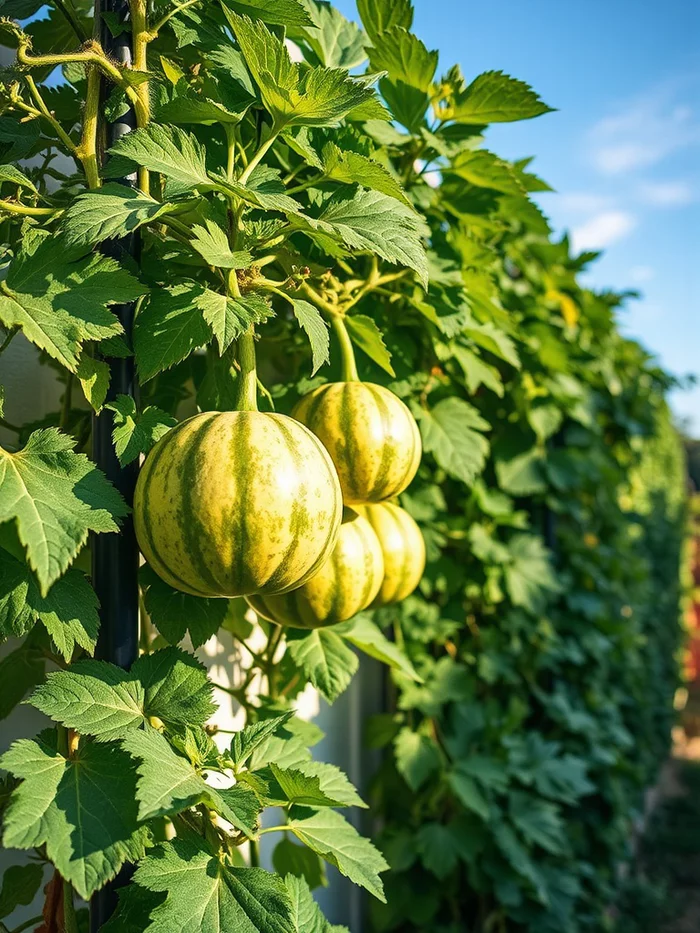
Vertical gardening offers numerous advantages for growing watermelons. First off, it keeps your melons off the ground, reducing the risk of pests and diseases. When watermelons are elevated, they can also receive better sunlight, which is essential for their growth. Additionally, this technique can make harvesting easier, allowing you to avoid bending down or crawling around your garden!
- Pest and disease prevention through improved airflow
- Enhanced sunlight exposure for better fruit development
- Convenient harvesting without straining your back
As a passionate gardener myself, I’ve found that vertical gardening transforms the growing experience, making it more enjoyable and productive. You’ll be amazed at how much you can grow in a small area!
Space-Saving Solutions for Small Gardens
If you have a small garden or even a balcony, vertical gardening is your secret weapon. By utilizing vertical space, you can cultivate a variety of plants, including those sprawling watermelons. Instead of letting your garden feel cramped, think about utilizing walls, fences, or trellises to create a lush vertical landscape. For more ideas on how to optimize your gardening space, consider vertical garden planter ideas.
- Use tiered planters to grow multiple plants in one space
- Attach trellises to fences or walls for climbing vines
- Incorporate hanging baskets for additional space efficiency
With a little creativity, your small garden can transform into a vibrant oasis of fruits and vegetables that not only look beautiful but also yield delicious harvests!
The Role of Vertical Planters in Maximizing Garden Space
Vertical planters are fantastic tools to help you make the most of your garden space. They come in various designs, from simple wall-mounted systems to complex tiered setups. These planters allow you to cultivate multiple watermelons and other crops in a compact area, which is especially beneficial in urban settings. With the right setup, you can create a stunning vertical garden that becomes a focal point of your outdoor space!
- Choose vertical planters that suit your garden's aesthetics
- Select options with drainage to keep plants healthy
- Consider your local climate when choosing materials
As you explore options, think about how vertical planters can not only save space but also enhance your gardening experience, making it more rewarding than ever!
Harvesting Your Watermelons: What to Expect
After months of nurturing your vertical watermelon garden, it’s finally time to enjoy the fruits of your labor! Harvesting watermelons can be an exciting moment, especially when you see those vibrant fruits dangling from your trellis. But how do you know when they’re ready? Let’s dive into the details of proper harvesting.
Know When to Harvest Your Vertical Watermelons
Timing is crucial when it comes to harvesting watermelons! A perfectly ripe watermelon not only tastes better but also has a texture that’s irresistible. So, how can you tell when it's the right moment?
- Color Change: Look for a deep green color with a slight sheen. As watermelons ripen, they often lose their shiny finish and develop a more matte look.
- Field Spot: The area where the melon rests on the ground (the field spot) should turn from white to a creamy yellow, indicating ripeness.
- Thumping Test: Give the watermelon a gentle thump. If it sounds hollow, it’s usually a sign that it’s ready to be picked.
- Tendrils Drying: Check the tendril closest to the fruit. When it turns brown and dries out, that’s a good indicator the melon is mature.
These simple tips can help you determine the perfect time to harvest and ensure your watermelons are at their best flavor-wise!
Tips for Safely Harvesting Without Damage
Now that you know when to harvest, it’s crucial to handle your watermelons correctly to avoid any damage. Watermelons can be heavy and delicate, so follow these simple guidelines:
- Use Garden Shears: Always use sharp garden shears to cut the stem close to the fruit without applying pressure to the melon itself.
- Support the Weight: When lifting, support the bottom of the melon to prevent it from slipping or dropping, which can lead to bruising.
- Harvest in the Morning: Try to harvest in the cooler parts of the day. This reduces the stress on the fruit and helps keep them fresh longer.
By taking these precautions, you can enjoy a successful and damage-free harvesting experience, bringing those beautiful watermelons from your garden to your table!
Recognizing Melon Ripeness Indicators for Optimal Timing
Understanding the signs of ripeness is not only rewarding but essential for the best flavor and texture. As you grow your vertical watermelons with All American Gardeners, keep these markers in mind:
- Inspect the color and sheen as mentioned earlier.
- Watch for the field spot color change.
- Pay attention to the tendril drying close to the stem.
- Practice the thumping technique to check for that hollow sound.
These indicators will guide you perfectly, ensuring that each watermelon harvested is a delicious treat! Happy harvesting—your vertical garden adventure is just getting sweeter! To further enhance your gardening skills and ensure optimal plant health, explore our guide on essential plant care tips for home gardeners.
Frequently Asked Questions About Vertical Watermelon Gardening
1. What are the main benefits of growing watermelons vertically?
Growing watermelons vertically offers several advantages, including reduced risk of pests and diseases, improved air circulation, enhanced sunlight exposure for better fruit development, and more convenient harvesting by reducing the need to bend or crawl.
2. How does vertical gardening save space?
Vertical gardening maximizes space by utilizing upward structures like trellises, walls, and tiered planters. This allows you to grow sprawling plants like watermelons in small gardens, balconies, or urban settings, transforming limited areas into productive growing spaces.
3. What are the key indicators that a watermelon is ripe and ready to harvest?
Key ripeness indicators include a change in skin color from deep green to a duller, matte finish, a creamy yellow "field spot" where the melon rested, a hollow sound when thumped, and the tendril closest to the fruit turning brown and drying out.
4. What tools are recommended for harvesting watermelons to prevent damage?
It is recommended to use sharp garden shears to cut the stem close to the fruit. Additionally, always support the watermelon's weight from the bottom when lifting to prevent bruising or dropping.
5. Can vertical planters be used for other crops besides watermelons?
Yes, vertical planters are versatile and can be used to grow a wide variety of plants, including herbs, strawberries, leafy greens, and other vining vegetables, making them a great solution for diverse vertical gardens.
Recap of Key Points
Here is a quick recap of the important points discussed in the article:
- Vertical gardening maximizes space and improves air circulation and sunlight exposure for healthier watermelon plants.
- Elevating watermelons reduces the risk of pests and diseases while making harvesting easier.
- Utilize vertical planters, trellises, and tiered setups to optimize small garden spaces.
- Know the signs of ripeness: color change, field spot, thumping test, and drying tendrils for optimal harvesting.
- Use garden shears and support the weight of watermelons during harvest to prevent damage.