Cultivate Your Best Garden!

Join Clara M. Greene's community for expert tips and seasonal guides tailored for American gardeners.

Efficient Vertical Cucumber Trellis Ideas


Efficient Vertical Cucumber Trellis Ideas

Posted on: 2026-05-09
By: Clara M. Greene


As spring approaches, it's time to roll up your sleeves and dive into the art of vertical gardening! This innovative technique not only enhances your garden's aesthetics but also boosts productivity. Are you ready to discover the secrets of maximizing your cucumber harvest with vertical trellising?

What You Will Learn

  • Vertical cucumber trellises promote upward growth, saving space and improving plant health.
  • Reduced soil contact minimizes the risk of diseases and pests, leading to healthier cucumbers.
  • Proper trellising techniques can significantly enhance your cucumber yield, with expectations of 2 to 5 pounds per plant.
  • Companion planting can improve growth and deter pests while creating a thriving garden ecosystem.
  • Implementing crop rotation helps maintain soil health and prevents pest buildup for sustainable gardening.

Vertical Cucumber Trellis Benefits & Yields

Discover how vertical trellising enhances cucumber growth, maximizes space, and boosts harvest yields with these key insights. For more information on optimizing your garden setup, you might want to explore exploring vertical garden benefits to further improve your yields and garden health.

Why Choose Vertical Trellising?

  • Maximizes garden space.
  • Reduces disease/pest risk (less soil contact).
  • Easier harvesting.

Benefits of Vertical Gardening

  • Improved Airflow (prevents mold).
  • Enhanced Sunlight Exposure.
  • Easier pest/disease monitoring.

Yield Expectations Per Plant

2-5 lbs

(With proper care & conditions)

Key Companion Plants

  • Beans (nitrogen fixers).
  • Radishes (deter cucumber beetles).
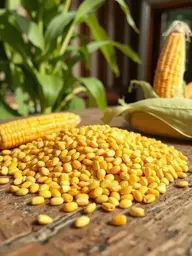
  • Corn (provides shade).
  • Nasturtiums (repel aphids).

Understanding the Vertical Cucumber Trellis Concept

As a passionate gardener, I've seen firsthand how a vertical cucumber trellis can revolutionize the way we grow our favorite cucumbers! This gardening technique allows us to maximize our growing space while improving the health of our plants. So, what exactly is a vertical cucumber trellis? Let’s explore!

What is a Vertical Cucumber Trellis?

A vertical cucumber trellis is a support structure that allows cucumber plants to grow upwards rather than sprawling along the ground. This can be achieved using various materials like wood, metal, or even repurposed items from around your home. By training the cucumber vines to climb, we can create a garden that looks neat and organized!

These trellises come in all shapes and sizes, from simple A-frames to elaborate arches. The best part? They not only provide support but also give your garden a visually appealing aspect. Your plants will feel secure, and you’ll love the aesthetic charm!

Why Choose Vertical Trellising for Cucumbers?

Cucumber plant growing on a vertical trellis with lush green leaves and small cucumbers, in a well-maintained garden, natural lighting, no text, no words, no typography, no labels, clean image, 8K

Choosing vertical trellising for cucumbers brings several advantages. Here are some compelling reasons why I advocate for this method:

  • Maximizes space in your garden, especially useful for those with limited areas.
  • Reduces soil contact, which can minimize the risk of diseases and pests.
  • Makes it easier to harvest cucumbers without bending over or crawling on the ground!

In my experience, these benefits make vertical trellising a smart choice for any gardener looking to enhance their cucumber-growing game! For additional gardening insights, consider checking out our article on organic gardening tips for beginners.

Exploring the Benefits of Vertical Gardening Techniques

Vertical gardening techniques, including the use of cucumber trellises, offer an array of benefits that extend beyond just cucumbers. Here are some of the key advantages:

  • Improved Airflow: With plants growing upwards, air circulation increases, helping to prevent mold and mildew.
  • Sunlight Exposure: Vertical growth ensures that every vine gets its fair share of sunlight, leading to healthier plants.
  • Enhanced Visibility: It’s easier to keep an eye on your plants for signs of pests or disease!

Embracing vertical gardening techniques has not only transformed my own garden but has also empowered many gardeners I’ve connected with through All American Gardeners. Together, we can grow thriving and beautiful gardens! 🌱

We Want to Hear From You!

As you embark on your vertical gardening journey, what challenges or successes have you experienced? Share your thoughts below:

Maximizing Your Harvest with Vertical Cucumber Trellises

When it comes to growing cucumbers, using a vertical trellis can significantly enhance your yield. But what can you realistically expect? Let’s dive into yield expectations, companion planting ideas, and crop rotation techniques that will help you make the most of your vertical garden!

Yield Expectations: What to Anticipate

With the right care and conditions, you can expect a bountiful harvest of cucumbers! A well-maintained vertical cucumber trellis can produce anywhere from 2 to 5 pounds of cucumbers per plant. This means that if you plant several varieties, you could be looking at a substantial yield.

Factors that influence your yield include:

  • Quality of soil and nutrients
  • Consistent watering practices
  • Sun exposure—aim for at least 6-8 hours of sunlight daily
  • Healthy plant varieties optimized for vertical growth

By paying close attention to these factors, you’ll set yourself up for a fruitful harvest! Remember, the more you nurture your cucumbers, the more they will reward you at harvest time.

Companion Planting Ideas for a Thriving Garden

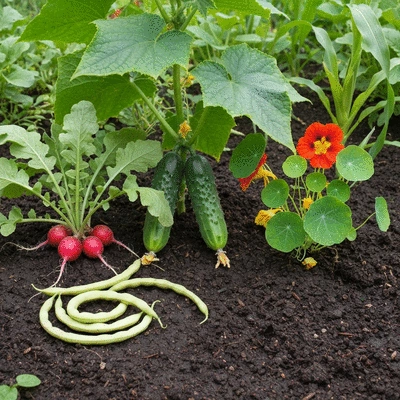
Variety of companion plants like beans, radishes, corn, and nasturtiums arranged aesthetically around a cucumber plant, emphasizing a thriving garden ecosystem, natural lighting, no text, no words, no typography, no labels, clean image, 8K

Companion planting can be a game-changer for maximizing your garden's potential. By planting cucumbers alongside compatible plants, you can enhance growth, deter pests, and improve soil health. Here are some excellent companions for your cucumbers:

  • Beans: They fix nitrogen in the soil, benefiting your cucumbers.
  • Radishes: These can help break up the soil and deter cucumber beetles.
  • Corn: Tall corn plants provide shade for cucumbers, keeping them cooler.
  • Nasturtiums: These beautiful flowers repel aphids and other pests.

By incorporating these companion plants into your vertical garden, you’ll not only make the most out of your space but also create a harmonious ecosystem! For more great pairings, check out our guide on companion planting for better yields.

Crop Rotation Techniques for Sustainable Gardening

Crop rotation is crucial for maintaining soil health and preventing pests and diseases. After harvesting your cucumbers, consider rotating them with different crop families. Here are some tips on how to effectively implement crop rotation in your vertical garden:

  • Follow your cucumbers with legumes like beans or peas to enrich the soil.
  • Plant leafy greens such as lettuce or spinach to cover the soil and reduce weed growth.
  • After a couple of seasons, introduce root crops like carrots or beets to diversify soil use and nutrients.

By practicing crop rotation, you’ll foster a healthier garden ecosystem and ensure that your vertical garden remains productive year after year!

Recap of Key Points

Here is a quick recap of the important points discussed in the article:

  • Vertical Cucumber Trellis: A support structure that allows cucumber plants to grow upwards, maximizing space and improving plant health.
  • Benefits: Enhances airflow, sunlight exposure, and makes harvesting easier while reducing the risk of diseases and pests.
  • Yield Expectations: A well-maintained trellis can produce 2 to 5 pounds of cucumbers per plant, depending on soil quality, watering, and sunlight.
  • Companion Planting: Pairing cucumbers with plants like beans and radishes can enhance growth and deter pests.
  • Crop Rotation: Important for soil health; rotate cucumbers with legumes, leafy greens, and root crops for sustainable gardening.

Frequently Asked Questions About Vertical Cucumber Trellising

Q1: What are the main benefits of using a vertical cucumber trellis?

A1: Vertical trellising maximizes garden space, reduces the risk of diseases and pests by minimizing soil contact, makes harvesting easier, improves airflow around plants to prevent mold, and ensures better sunlight exposure for healthier growth.

Q2: How much yield can I expect from cucumbers grown on a vertical trellis?

A2: With proper care and optimal conditions (quality soil, consistent watering, 6-8 hours of sunlight, and healthy plant varieties), you can expect a yield of 2 to 5 pounds of cucumbers per plant.

Q3: What are some good companion plants for cucumbers grown vertically?

A3: Excellent companion plants include beans (for nitrogen fixation), radishes (to deter cucumber beetles), corn (to provide shade), and nasturtiums (to repel aphids). These pairings create a more harmonious and productive garden ecosystem.

Q4: Why is crop rotation important for vertical cucumber gardens?

A4: Crop rotation is crucial for maintaining soil health and preventing the buildup of pests and diseases. By rotating cucumbers with different crop families like legumes, leafy greens, or root crops, you enrich the soil and ensure long-term garden productivity.

Q5: What materials can be used to build a vertical cucumber trellis?

A5: Vertical cucumber trellises can be constructed from various materials such as wood, metal, or even repurposed items. The key is to create a sturdy support structure that allows the cucumber vines to climb upwards.

Subscribe & Share
Caring for Azalea Bonsai Flowers Caring for Azalea Bonsai Flowers Caring for azalea bonsai can transform your gardening experience, turning a simple hobby into a vibr
Growing Hydroponic Lettuce at Home Growing Hydroponic Lettuce at Home Hydroponic gardening is revolutionizing how we grow our food. With innovative techniques and sustain
Bonsai vs. Pre-Bonsai Explained Bonsai vs. Pre-Bonsai Explained What if your next gardening project was not just about planting but creating a living art piece? Und
Creating a Chamomile Garden Creating a Chamomile Garden Did you know that incorporating chamomile in your garden can do more than just provide beautiful blo
Growing Green Bean Seeds Easily Growing Green Bean Seeds Easily Did you know that the right soil preparation can significantly impact the success of your green bean
Growing Thai Basil from Seeds Growing Thai Basil from Seeds Did you know that incorporating herbs like Thai basil can significantly enhance both the flavor of y
Banner
All American Gardeners

Your premier online resource for mastering home gardening across the U.S. We empower American home gardeners with expert tips, step-by-step guides, and sustainable practices for thriving outdoor spaces.

Trusted by gardeners nationwide, our mission is to provide reliable, easy-to-follow insights backed by Clara M. Greene's extensive horticulture experience and practical advice.

Cultivate Your Garden
Recent Posts
Caring for Azalea Bonsai Flowers Caring for Azalea Bonsai Flowers

Caring for azalea bonsai can transform your garden

Growing Hydroponic Lettuce at Home Growing Hydroponic Lettuce at Home

Hydroponic gardening is revolutionizing how we gro

Bonsai vs. Pre-Bonsai Explained Bonsai vs. Pre-Bonsai Explained

What if your next gardening project was not just a

Gardening Wisdom from All American Gardeners